
People make the village - part 5 of the story series
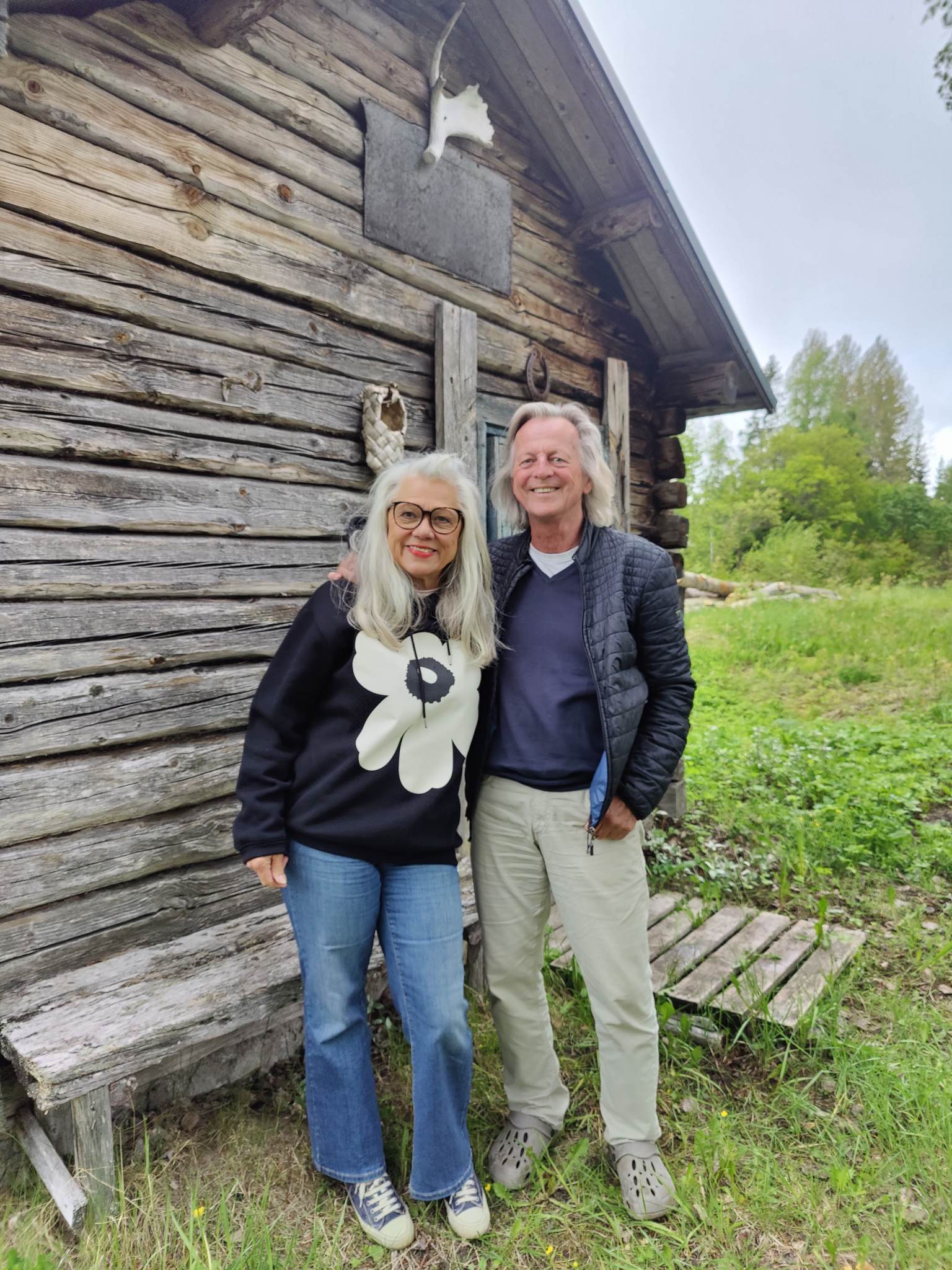
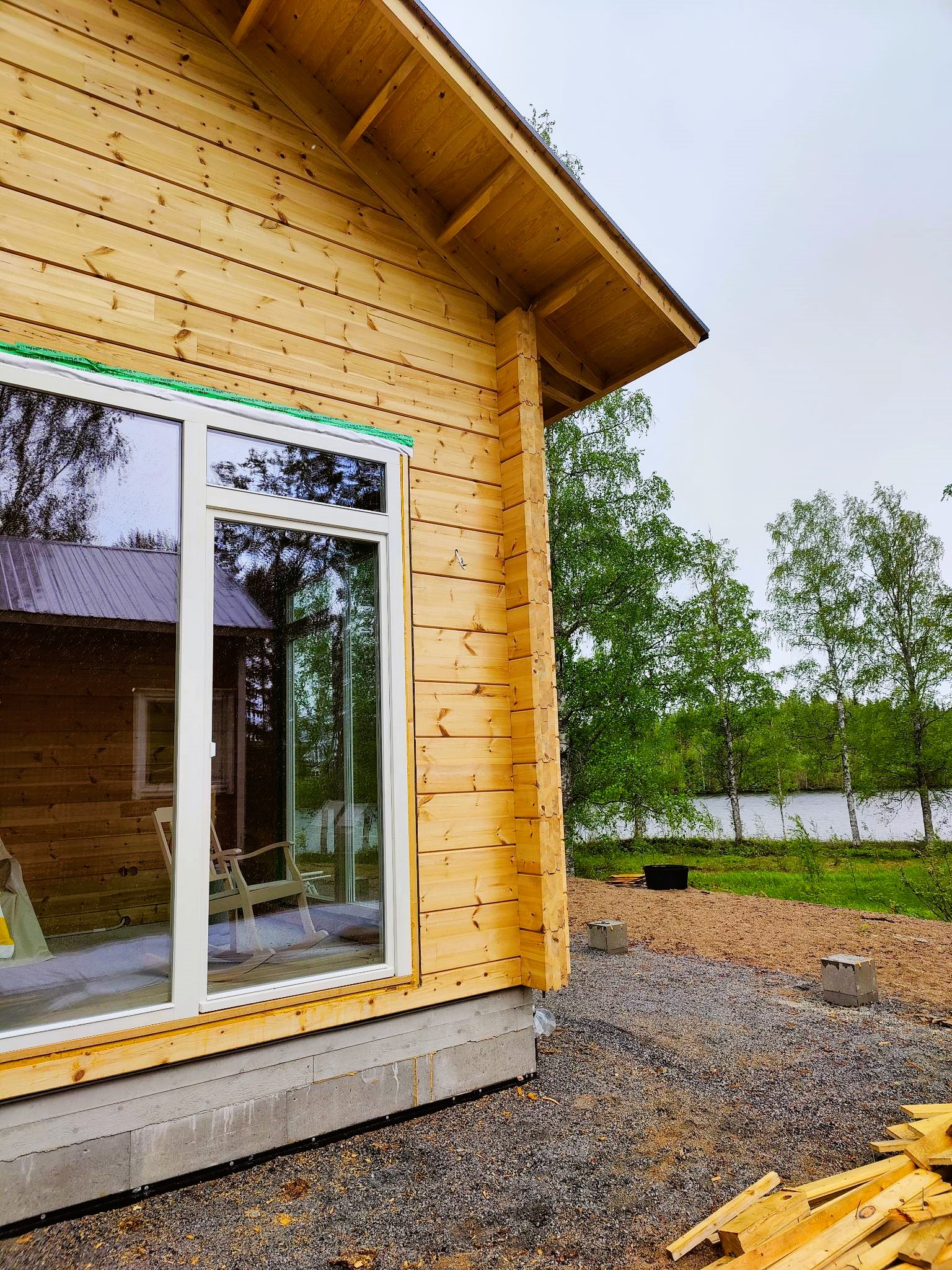
Pictures: Johanna Koponen
We come here as if to our home
I drive along the dirt road that runs along the banks of the Kerkonkoski canal through an old spruce forest. When I arrive at the yard, a log house rises in front of me, with a small red cottage next to it. I get a hint from a worker who is found in the log house under construction that the host couple can be found in the cottage. I climb a few steps into the cottage and take off my shoes. I am welcomed with a smiling face into the house, whose ragged carpets and the summery light reflecting from the old windows take my thoughts back to the summers of my childhood. As I step inside from the hallway, the cottage’s owner, Peter, looks at my feet and rushes to put on slippers for me. Understanding German a little, I hear Annuka say, “Yes. Here in Finland, we take off our shoes inside.”
We sit in low-backed armchairs at a round table with a lace tablecloth, and I am offered warm tea. I admire the classic 70s-style chairs out loud. Annukka tells me that the chairs came with the cottage and that she has recently had them upholstered by a seamstress from Kerkonkoski. I each sip tea from a decorated porcelain cup and immerse myself in listening to the story of the Enzensberger couple.
When Annukka, a high school student from Lahti, left for Germany in 1970, she probably didn't think that she would end up in that situation. After receiving her Finnish passport, she was able to study at the University of Mainz as a translator. Even before she started her studies, on her trip to Sonthofen, she met a young architecture student, Peter. The affair with the German boy went well right from the start, and soon Peter's mother also invited Annukka and her friends to the village. At the end of the visit, the young people headed to a local disco and Peter invited his cousin along. After all, he couldn't take care of three Finnish girls alone, and it so happened that Annukka's best friend Maija fell in love with Peter's cousin, whom she later married.
Annukka graduated from the University of Mainz with a diploma in translation, but there were few jobs in the field, so she ended up studying to become a teacher. The couple found their home in the small, picturesque rural village of Schielberg. Annukka worked as a teacher in the small village school in the same village for 30 years. Peter, on the other hand, has had a great career as an architect and has designed a wide range of projects, including the restoration of historical, protected sites, public and industrial buildings, and private houses. The interest in historical buildings is also evident in the Enzensbergers' German home, which is 285 years old and surrounded by a lush garden. Fachwerkhaus i.e. a traditional German half-timbered house.
So what made the couple buy that red cottage in Kerkonkoski? The region was already familiar to the couple, as they had first visited the summer cottage of Maija's parents, Annukka's friend mentioned earlier, for the first time a couple of decades ago. When it was time for Maija to give up her summer place four years ago, Annukka and Peter offered to buy a beautiful waterfront plot with buildings. Even then, they had the idea of building on the same plot, as the current cottage was too small to accommodate the couple's daughter's family and friends. Spending time with loved ones is more precious than gold for the couple.
There were many reasons for purchasing a holiday home. Annukka has always wanted to spend her summer holidays in Finland. Annukka noticed the impact of Finnish holidays while she was working: “When I arrived back in Germany, I felt so peaceful.” With the family’s summer holidays, visits to Finland have also become an important tradition for the couple’s daughter, Mari. After all, Mari now has her own children, whom she shows Finnish life, nature and culture to.
Community is important to the couple. Unlike, for example, in southern Finland, the neighbors in Kerkonkoski are not just neighbors, they have become friends. “It feels like home here. Friends have heated the cottage for us and in the winter the road is plowed all the way to the yard,” Annukka rejoices, and Peter, who is somewhat fluent in Finnish, nods with a smile.
For Peter, designing a log house was an interesting project, as he had never done anything like it in his long career. The starting point for the design was that the building is part of the surrounding nature. The design took into account the cardinal directions, local building style and energy efficiency. Peter respects the framework provided by the environment and wood plays a strong role as a material in the building. The log will not be treated in any way, but will be allowed to grey over time to fit even better into the landscape. He praises that the implementation has gone smoothly with the local construction professionals, their “team”. The work ethic has been impeccable and the work has been done in all weathers. In Peter’s experience, the permit process is rarely as straightforward and friendly as it has been with the Rautalammi building authorities.
German hospitality may have been confusing to the local workers at first. It has become a tradition for the couple to offer the team espresso cups instead of Juhlamokka during the work break. When the house is completed, a crest-raising party is held for the partners. When I ask Peter about the differences in construction between Finland and Germany, he praises the fact that working here is very straightforward and seamless between the different actors. “In Finland, at least in this industry, there is no tipping culture. In Germany, it is customary to give coffee money to suppliers, for example, but here it is mostly surprising,” Peter points out.
Although the house is under construction, the busy Peter, who comes from a family of craftsmen, has already made a vegetable garden on the plot, where potatoes, beans and peas grow, among other things. “Nature and water bodies are so important to us.” Annukka says. This year, the couple was in Kerkonkoski during the sunny spring months in March, and they have also spent early summer on the plot thanks to the construction project. “It’s just so good to be here. It’s like soul yoga when you have time to just be and wonder. Watching woodpeckers build nests and swans home.” Annukka sighs and Peter nods with a smile.
The author is Johanna Koponen, a project worker for the Kerkonkoski Ketterän Kerkolla Kylään project. The project has received Leader support from the Development Association Mansikka ry.
Pictures: Johanna Koponen, Peter Enzensberger
The purpose of this feel-good series is to make life in Kerkonkoski visible and bring the villagers closer to each other. The series introduces new and old acquaintances, those who have moved to the village and those who have lived there all their lives.


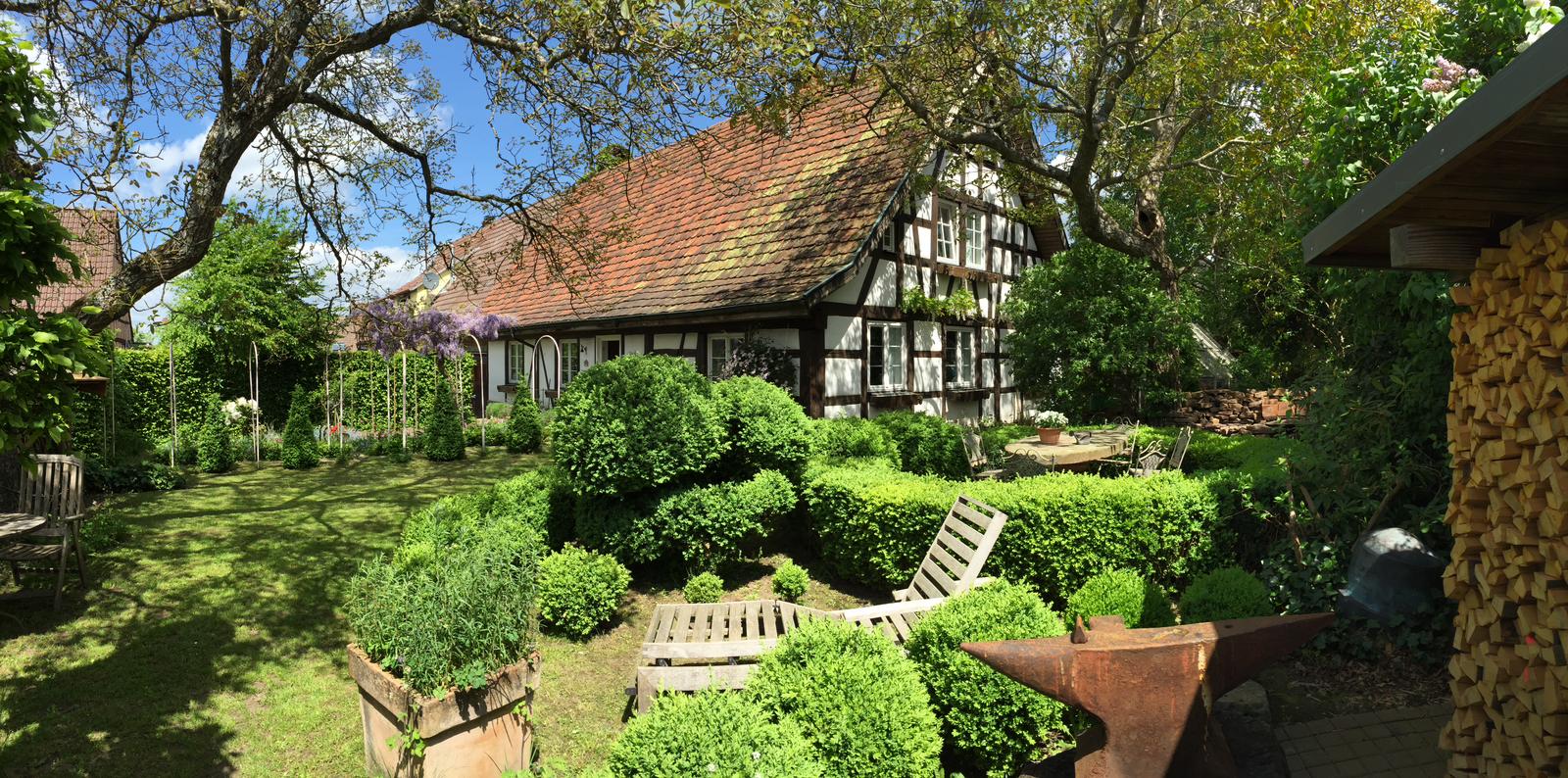
Enzensbergerien Saksan koti. Kuva: Peter Enzensberger