Tourist map

Kerkonkoski Saunamaraton

In english

Large map

1. Anna WildRose's gallery

2. The Two Canals bicycling route

3. Giants’ temple

4. Katarina's spring

5. Karhuniemi Lappish ruins

6. Iceland Witch

7. Gravel canal

8. Leppäkorpi spring

9. Koipiniemi hut

10. Rautavuori view point

11. Mäenlahti spring

12. Rantatie beach

13. Rastunsuo bird lake 

Kerkonkoski village map

1. Village house Seurala

2. Caravan park

3. Recycling point

4. Old Mill

5. Village shop

6. Summer restaurant and rental cottages

7. Kerkonkoski harbour

8. WC, shower & water point

9. Harbour Beach

10. Canal builders’ monument

11. Kerkonkoski canal

12. Kerkonjoki field fortress monument 

© Kerkonkoski Ketterä 2025
All rights to the map reserved. Use, modification and distribution of the map is only permitted by the subscriber.

Associations


Associations

Taitava Kerkonkoski ry

Taitava Kerkonkoski ry is a cross-disciplinary association founded in May 2024 with the aim of supporting all kinds of creative activities in Kerkonkoski.

Kerkonkosken Ketterä ry

Our village is known for its active population, who work hard to maintain the vitality of the village community. The oldest association in the village is Kerkonkosken Ketterä, which is still a vibrant and important part of village life.

Kerkon Erä

Kerkon Erä ry is a hunting club founded in 1963 with approximately 90 members. The club's hunting grounds cover an area of approximately 5,000 hectares. Members have access to the Jahtikallio hunting lodge, which was acquired in 1980.

Kiesimä Village Association

The Kiesimä village association, located in Kerkonkoski's neighboring village, is a small but active association. The association rents out its cottage near the Kiesimä canal during the summer.

Suonenjoki - less than half an hour

Rautalampi - just over fifteen minutes

Kuopio - hour

Jyväskylä - a good hour

South Konnevesi National Park - half an hour

Helsinki - four hours or so

Kerkon Evening Fishing 2024

Kerkon Evening Fishing 2024

Iltapilkki 24

Joy and togetherness in the middle of a long winter 

The Kerkonko Evening Fishing Festival was held for the second time last Saturday, March 9th, in Hietaharju, Kerkonkoski. The event is a joyful demonstration of the volunteer spirit of the people of Kerkonkoski.

The number of ice fishermen participating in the competition was the same as last year, 71 people. The largest catch was 2385g. Ice fishermen ranged from under-school age to senior citizens. The ice fishing competition was held in five different categories and the cash prizes were determined based on the number of participants. Children and young people received prizes in goods.

On the ice of Hietaharju there was also other activities for the whole family on a Saturday in March. Those who wanted to try out tandem skiing, raffle tickets were sold and there was fishing for children. The lovely Vipa horse took us on a sleigh to the seine site to watch the winter seine haul. The fishermen's catch of fish from the seine this time was small, but there was plenty to marvel at in the operation!

Kerkonkoski Evening Ice Fishing originated from the coffees, "business food" of Kerkonkoski entrepreneurs, in the fall of 2022. Kerkonkoski's summer is lively, but in winter, there are few meetings in the village, so we started working together on the idea of ​​a winter event.

Village shop Kosken Puotipiika Café Kuha served sausage, pea soup, wall-bottom pancakes and other delicacies to the event attendees on Saturday. There was a pleasant buzz of conversation at the long tables, as villagers and those from further afield met over a hot cup of coffee. The event organizers were most pleased by the happy faces and the chatter.

Event manager Juha Karppinen describes the talk show: "On Friday, when we gathered, I noticed that the volunteers' batteries and mittens were full of volunteer energy. After the start on Saturday morning, the assembly of the competition site went smoothly, the tents were put up, the Baja hut was moved, the benches, chairs, fire pits, lights, signs and instructions were all quickly placed in their places. It was as if everything had been carefully planned in advance."

Karppinen jatkaa: “There were 45 volunteers in total, most of whom worked in ice fishing and some in Cafe Kuha, Wille's seine or Afterpilkki in Seurala. Not forgetting the ice maintenance team and those who were involved in spirit, the number is rising rapidly. From my perspective, all the teams did their part very well, and I heard from many people that they were satisfied with the arrangements and offerings of the event.”

The event day did not end with the ice fishing competitions, but the evening continued at the Village Hall Seurala. At 6:00 PM, a KeKe-RautU ice hockey match was played on the Seurala field. The battle was tight and the game ended in a 4-4 draw. A large crowd had gathered to cheer on their favorite teams.

The 150 tickets for the After Pilk organized by Kerkonkoski Keitaa were sold out, but even before the tickets went on sale, about 100 people had time to visit the Seurala. In total, well over 200 event guests visited the Seurala during the evening. The theme of the After Pilk was a masquerade, and the prize for the best costume was won by a gorgeous steampunk-style couple (picture). The crowd was entertained by the party band Ninety Show, and the evening continued late into the night to the tunes of DJ MIKSEI.

We would like to thank everyone who participated in the event! Event guests, ice-fishing competitors, hockey players, volunteers, entrepreneurs and sponsors. Together you are the lifeblood of the event! 🙂

Thank you sponsors!

Financially supported by:

Maansiirto Jari Hämäläinen, Sisä-savon Nuohouspalvelut Oy, Suomen Kaapelikaivuu ja Suuntaporaus, SKKS Oy, Autohuolto Miskala, MV-Louhinta Ky, Rautalammin Osuuspankki, Taksi Jämsinen

Those who supported with gift cards and merchandise prizes:

Atoy autohuolto, Auto-apu Auto Oy, Demorec Oy, Eckerö line, Farmarin verkkokauppa, Hessun autopesula, Hankkija Suonenjoki, Huhtalan maatila, Jarmo Lappi, Jukolantila, Kivisalmi Oy, Kerkonkosken Keidas, Kylpylähotelli Kunnonpaikka, K-Rauta Suonenjoki, Kuopion autokauppa, Linda Nissinen, Luottobiili, Mätitalo Oy, Mika Haukka, Rautalammin Neste, Rautalammin kunta, Rautalammin Työppäri Bingo, Ravintola Hetki, Sisä-Savon sähkö, Suonenjoen sähköasennus, Sisustuspiste Martinseni, Tuija Jäntti, Tokmanni Suonenjoki, Vianor, Vesannon auto ja konetarvike, Veera Vuorela, Ämsee Rautalampi, Öljy-Jokeri, Halmetoja & Rinnevuori Oy, Greentrail

Village Hall Seurala

Village Hall Seurala

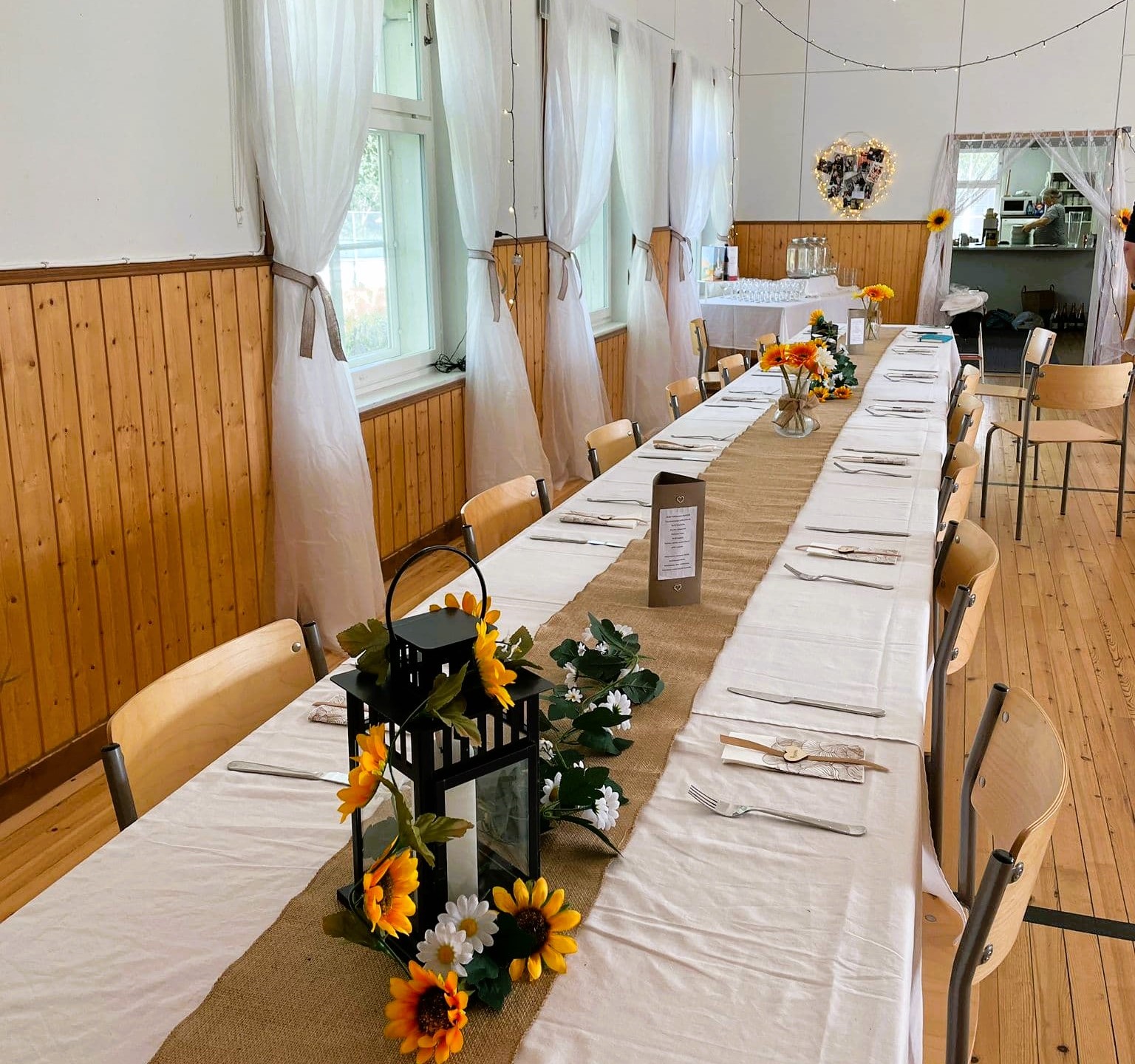
Our atmospheric village hall offers space and a rural atmosphere for all kinds of celebrations and events. Whether it's a traditional summer wedding, a milestone birthday, or a corporate event, the log-built Seurala is suitable for many different occasions.


LOCATION

Located in the heart of Kerkonkoski village, Seurala exudes the atmosphere of times gone by. The large hall and café area are available for a wide variety of events. The log walls and spacious interior provide a pleasant backdrop for decorating for any occasion. Only your imagination is the limit! 

Club rentals:
Entire house €170/day or €350/weekend
Koko talo 70€ max 5h (varattaessa pe-su ajalle varaus vahvistetaan 2 vkoa ennen varauksen alkua)
Café Mon–Thu €30/event
Café Fri–Sun €50/event
(Tapahtuman kesto max 4h. Kysy pidemmistä tapahtumista tarjous)

Final cleaning of entire house €200
Loppusiivous kahvio 90€
Tablecloths €6.5/each

Tableware is included in the rental price, but we also rent separate coffee sets for events outside the house for €50. A large coffee maker is also available for rent for €30.

Cleaning the premises after renting is the responsibility of the renter unless they purchase a final cleaning service. However, the renter is responsible for disposing of trash bags and empty bottles. Rental income goes to the Kerkonkosken Ketterä village association.

Seuralan osoite: Kerkontie 15, 77930 Kerkonjoensuu


 Facility details:

  • Maximum capacity: 150
  • Seating in auditorium style: 100
  • Seating for dining: 100
  • Tableware and serving dishes for up to 100 people
  • 2 coffee makers, kettle, microwave
  • oven & stove
  • fridge-freezer and one tall fridge
  • dishwasher
  • heating/cooling with air source heat pump
  • 2 toilets
  • video projector & screen
  • accordance with the current
    alcohol law. Temporarily, alcohol can be served through a catering company or, alternatively, you can bring your own alcoholic beverages.
  • Large parking area

The village also offers unique accommodation options! 

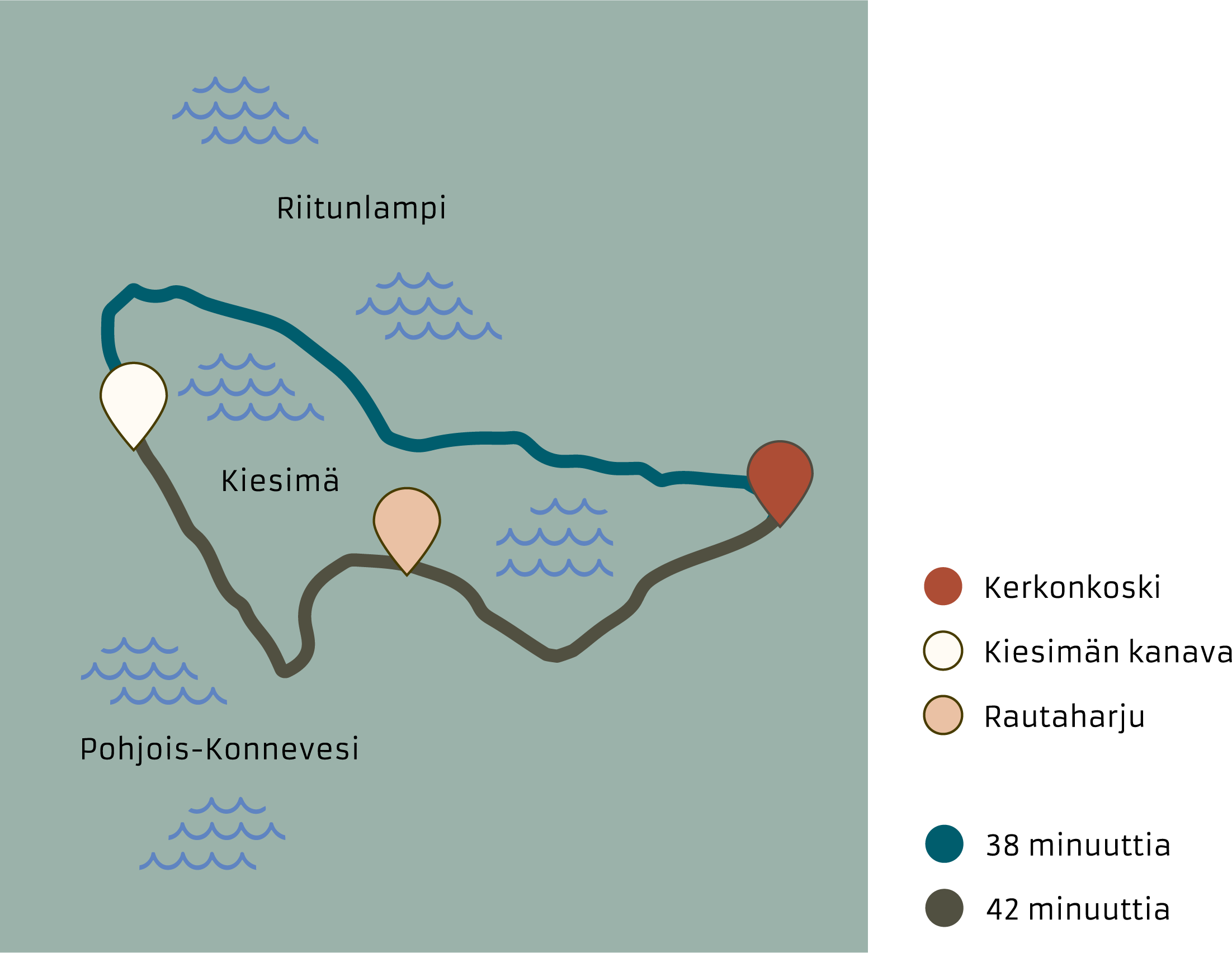
Two-channel route

Kahden kanavan kierros pyöräillen

Aloitus- ja lopetuspaikka: Kerkonkosken kylä
Kesto: n. 2h
SoveltuvuusSoveltuu hyvän peruskunnon omaaville pyöräilijöille. Reitti on suurimmaksi osaksi hiekka-autotietä.
Pituus: 28 km 

Reitti Outdooractivessa

Reitti kulkee Kiesimäjärven ympäri ja sen varrella on ihasteltavana useita maatiloja, mäntykangasmetsää ja historiallinen Kiesimän kanava. Kanavalla on nuotiopaikka ja käymälä. Jos haluat majoittua reitille, Kiesimä village association cottage tarjoaa edullisen majoituksen kanavan läheisyydessä. Pyöräilyn päätteeksi maistuvat löylyt ja pulahdus kirkkaaseen Kiesimään.

Palatessasi Kerkonkosken kylälle, tutustu mennyttä aikaa huokuvaan Wanhaan Myllyyn sekä Kerkonkosken kanavaan ja piipahda syömässä seudun parhaat pizzat Kerkonkosken Keitaalla kanavan rannalla. Kylällä on myös aito kyläkauppa, josta hakea täydennystä retkieväisiin.

Tämä reitti ei jätä kehoa eikä mieltä kylmäksi!

History of the village

Historiaa

Jukka Vesterinen and Lena Lindroth-Vesterinen


What before?

The Kerkonkoski region was under water during the Yoldia Sea period approximately 9,700 years ago. The three highest mountains were visible as islands: Palvavuori, Rautavuori, and Murtovuori. 

Kerkonkoski is located near the border areas of the Treaty of Pähkinäsaari, which was signed in 1323. In ancient times, the Sami people roamed these lake areas in Central Finland, hunting and fishing. Gradually, they moved north as the Häme people's hunting and fishing grounds increased in these areas. 

In the 16th century, King Gustav Vasa of Sweden wanted to settle the eastern border areas, vast wildernesses, and tie them to Sweden. The earliest settlement in this area was concentrated in Kerkonjoensuu, in the village of Vesterilä. The first piece of land, Kerkoneräsija, was purchased by Tuomas Korhonen in the mid-16th century, and he settled there permanently. The Korhonen family stone in the village of Vesterilä serves as a reminder of this.

The southeast-northwest waterways and lakes formed during the Ice Age served as transport routes, as did the cart tracks that emerged on the ridges and later the roads and ice roads in winter. The vital mill was located at Kerkonkoski, near the rapids and hydropower. As the population grew in the village of Vesterilä and after the Great Partition, settlements and farms with their crofts gradually spread throughout the region. Farms that were almost self-sufficient and agriculture and livestock farming developed. Adversity, wars, the Great Northern War, and years of famine and starvation took their toll. 

A part of world history also touched Kerkonkoski when field fortifications and moats were built on the southern bank of the river in 1916–17. The reason for this was the threat of a German army landing on the west coast of Finland and advancing towards St. Petersburg in connection with the First World War.   

In the mid-19th century, the rapids' hydropower and untouched forests attracted the sawmill industry to Kerkonkoski. Workers moved to the area. The community's population structure became more diverse, as did its services. Among other things, Rautalammi's first school, a factory school, was established in 1864. Prosperity increased, even though there were years of famine. The era of industrialization touched Kerkonkoski, and the locals began to talk about Ruukki (bruk). New steam sawmills on the coast soon eclipsed the importance of hydropower, but there was a need to transport timber to industrial centers on the coast or along the developing railway network.

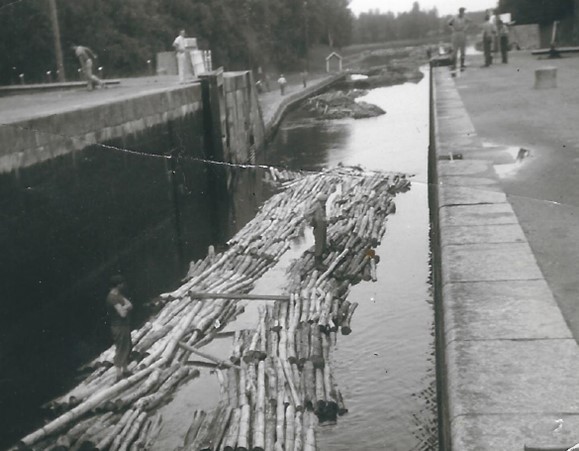
Between the large lakes at different levels of the water system, there were isthmuses or rapids that required the construction of canals. In 1927, the Iisvesi–Konnevesi–Keitele canal route was completed. Later, in 1994, the Keitele–Päijänne canal was completed. Kerkonkoski gained an element that is an essential part of the village's appearance and image: the canal and the swing bridge. There was a traffic sign at the bridge: "30 päiväsakon uhalla kielletään juosten ajo sillalla.When the canal switched to self-service, a new high bridge was built in 1969, which ships could pass under, and the swing bridge was removed. Log floating, log pulling, steamboats, tugboats, and the hustle and bustle of the canal were an essential part of the village's summer life and atmosphere. With the transition from timber floating to wheeled transport, the canal now serves recreational boating. 

In the mid-20th century, the village had three shops, a bank, a post office, a health clinic, cafés, a bar, and other services, as well as active cultural, social, sports, and other activities. The school was bustling with competition and excitement. At least ten bus routes a day brought people to and from the village. 

What now?

A large proportion of the baby boomers born after the war jumped on one of those ten buses and left their hometowns. They set out to build an urban, industrial society. Each in their own way and in their own field.

Society's values have changed. The world has become globalized. Our daily bread, even our food, does not come from our neighbor's or our own fields. Self-sufficiency is an unknown concept, or at least one that has been forgotten. Our children and grandchildren have adopted today's values. For them, the countryside is nostalgia or an image of warm summer days at the beach sauna, heated by grandpa. Or mosquitoes buzzing around. 

Structural change has been evident in Kerkonkoski, as elsewhere in rural areas, and has seemingly taken its toll and led to passivity. Primary production, agriculture, forestry, and fishing have undergone the greatest change. Small farms have disappeared. Agriculture now operates in large units, on an almost industrial scale. Alongside this production, I believe that local production, organic or otherwise, will naturally emerge as a necessity. Low-profile production and micro-entrepreneurship based on expertise and with a reputation that carries far. Summer cottages, vacation homes, and remote work opportunities bring life to the area, provided that the connections really work. Everything requires an open mind and, above all, realism. 

As a brief overview of history shows, there have been many different phases, economic cycles, setbacks, upturns, growth, and recession. The driving force has been determination. The spirit of enterprise that is inherent in human nature. That is what carries us forward. 

In the 16th century, a few brave pioneers moved to the ancient village of Vesterilä, and the entire village grew from there. We believe that the same courage, open-mindedness, and vision can be found today!